2011
First Regenerative Medicine Department in Türkiye
Prof. H. Eray Copcu, MD, becomes professor and lays the foundations for regenerative medicine education within the Turkish university system.
Founded in 2015 by Prof. H. Eray Copcu, MD, after his work establishing the first Regenerative Medicine Department within the Turkish university system. G-CAT supports education, scientific exchange, and professional training across gene, cell, and tissue science.
G-CAT Academy teaches regenerative medicine topics such as gene therapy, cell-based therapies, tissue science, and exosome research. Through meetings, academic programs, and professional collaborations, the Academy supports clinicians, researchers, and healthcare professionals working in regenerative science.
We see G-CAT as a place where biology, surgery, and translational science can be studied together for the benefit of patients and the discipline.
Our curricula are built on peer-reviewed science, clinical experience, and continuous engagement with the regenerative medicine community.
G-CAT is an academic education group, not a treatment provider. We communicate within the boundaries of current scientific evidence.
Prof. H. Eray Copcu, MD, becomes professor and lays the foundations for regenerative medicine education within the Turkish university system.
G-CAT, the Gene, Cell and Tissue Academy, is founded to support academic education in regenerative science.
The Academy expands its international scientific collaborations and launches ALLARMS, All About Regenerative Medicine and Surgery.
G-CAT continues to support clinicians, researchers, and healthcare professionals with structured, evidence-based regenerative education.
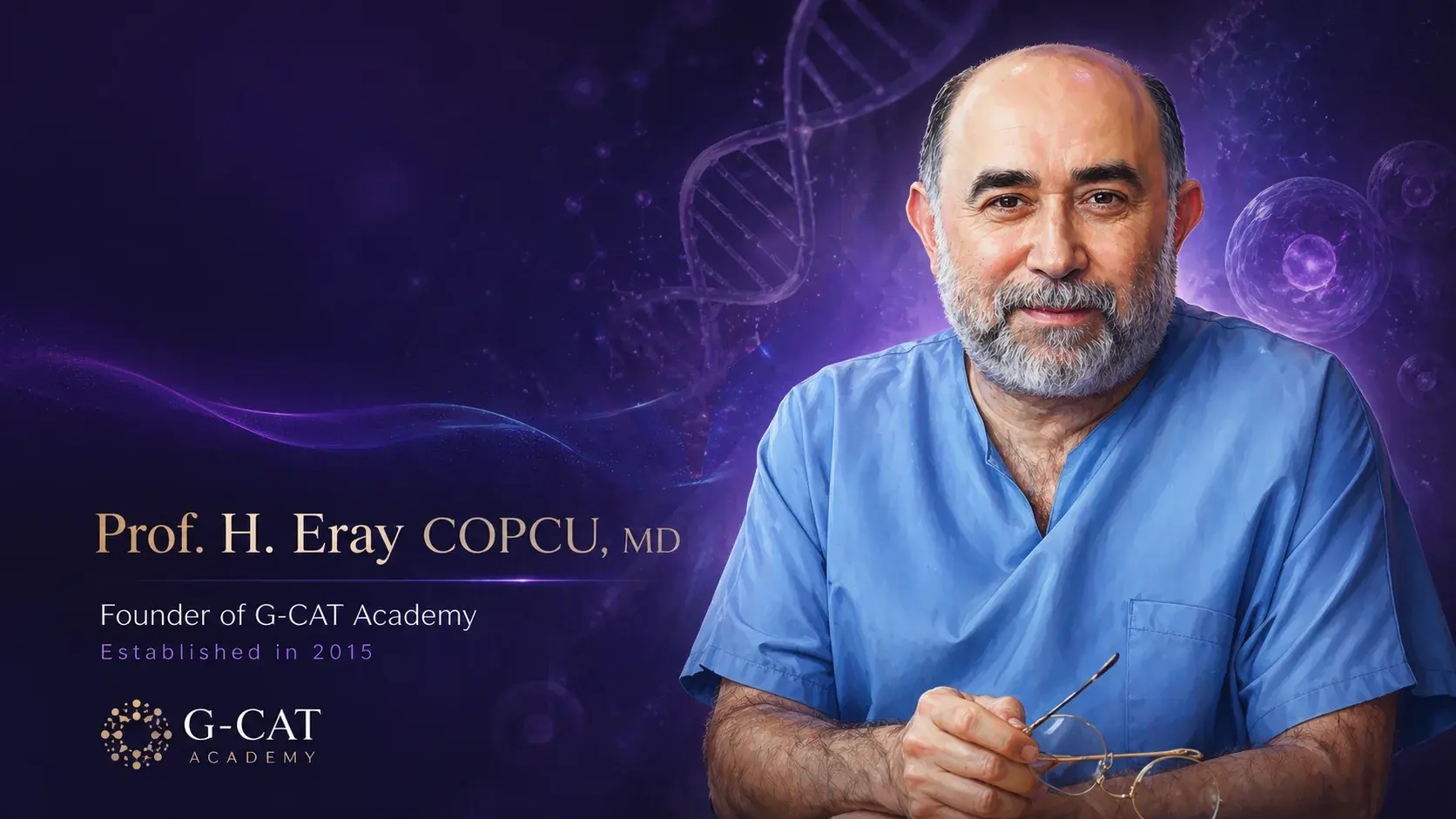
Founder of G-CAT Academy · Established 2015
A distinguished plastic surgeon, academic, and pioneer in regenerative medicine. His clinical and research work focuses on stem cell-based therapies, exosome technologies, adipose tissue biology, and regenerative surgical techniques, including patented innovations such as MEST, ARAT, and COPCU's Mammaplasty.
The Academy curriculum is built around the disciplines that shape cell-based and gene-based clinical practice.
Trust is essential in regenerative science. The Academy's structure is shaped by peer-reviewed evidence, faculty experience, and a commitment to responsible education.
An advisory board of clinicians and researchers active in the regenerative sciences guides the academic direction of G-CAT.
Programs are developed and delivered by faculty drawn from clinical, academic, and translational research environments.
Curricula are anchored in peer-reviewed evidence, with continuously updated readings and research references.
Education follows current evidence, regulatory awareness, and ethical principles of clinical practice.
Active scientific collaborations with international academic societies and research institutions.